Average Weight: 15-17 pounds (6.8 to 7.71 kg)
Average Height: 10 - 15 inches (25.34-38.1 cm)
Pronounced: MIN-e-ah-chur Poo-duhl
Group: Non-sporting
Max Life Span: 20 Years
Average Litter: 4 -5
Origin: Germany | Developed in France
Appearance
The Miniature Poodle has the same appearance as the toy, but is larger; 10-15 inches at the shoulder and generally 10 pounds or so heavier.
This breed is very graceful and carries itself with confidence and pride, walking with its head held high. This mini Poodle is very well proportioned and considered "squarely" built.
Most will have dark oval shaped eyes, however amber eyes can sometimes be found with brown, cafe au lait and silver beige dogs.
The muzzle is long with a slight chiseling under the dog's eyes. The ears are thick and hang down close to the face. The tail is customarily docked (in countries in which it is legal, including the United States) to a medium length.
The coat is one of this dog's most incredible features and great care must be given to keep the coat healthy and tangle free. A Poodle has hair as opposed to fur and it is naturally curly and very dense. Many people believe that dogs who have hair are "hypoallergenic", however it must be noted that it is the fact that this breed does not shed that leads people to believe that they would not cause allergies. The hair does not shed (fall to the ground)...it falls into itself, one of the reasons why the coat must be brushed often. Even so, Poodles and all dogs do produce dander which can cause allergies to some people.
While the Miniature Poodle is famous for it's intricate clips, the coat can be corded if an owner chooses, this is achieved by not clipping the coat and allowing the hair to grow. The cords will then begin to develop when the dog is between 9 and 18 months old. Learn about coat issues here.
Colors
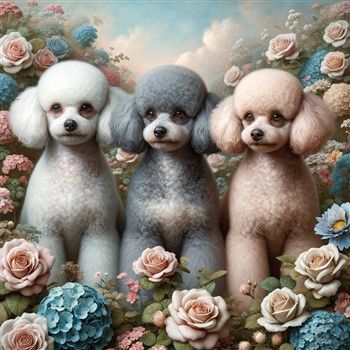
Miniature Poodles may be solid, parti colored (a mix of colors) or phantom colored. Poodle colors are: Apricot, Black, Blue, Brown, Cafe Au lait, Cream, Gray, Red, Silver, Silver beige and White. Learn much more about Poodle colors here.
Care Information
One of the most important aspects of taking care of a toy Poodle is to always understand that the size of the dog will dictate its care. Young puppies are susceptible to Hypoglycemia. Any toy dog is considered an "under-the-foot" dog, meaning that they are very small and can easily be injured by being accidentally stepped on, jumping from too high of a height or when being played with too roughly.
Daily dental care along with yearly professional care is very important as is grooming and clipping of the coat. Proper feeding will help to ensure a happy and healthy dog and prolong the miniature Poodle's life span.
Temperament
This breed is known for its intelligence and generally does very well with house training and command training. Despite its size, the mini can be a great watchdog by alerting you to the presence of strangers on the property with its sharp bark. Able to walk longer distances than the toy, daily walks should be given to ensure good health. and a nice run in an enclosed yard is usually welcomed. When a dog is not given enough exercise, behavioral issues can develop.
Miniature Poodles usually get along very well with children, however because they are very small when puppies, children must be taught how to proper handle them during care and play.
Health Issues
Even though the toy, miniature and standard Poodles are considered the same dog breed, they do have different health issues. The miniature is more prone to Epilepsy, hypothyroidsim, hip dsyplasia, Sebaceous Adenitis, luxating patella, Legg-Calve Perthes, von Willebrand's disease and PRA. Learn about health issues here.